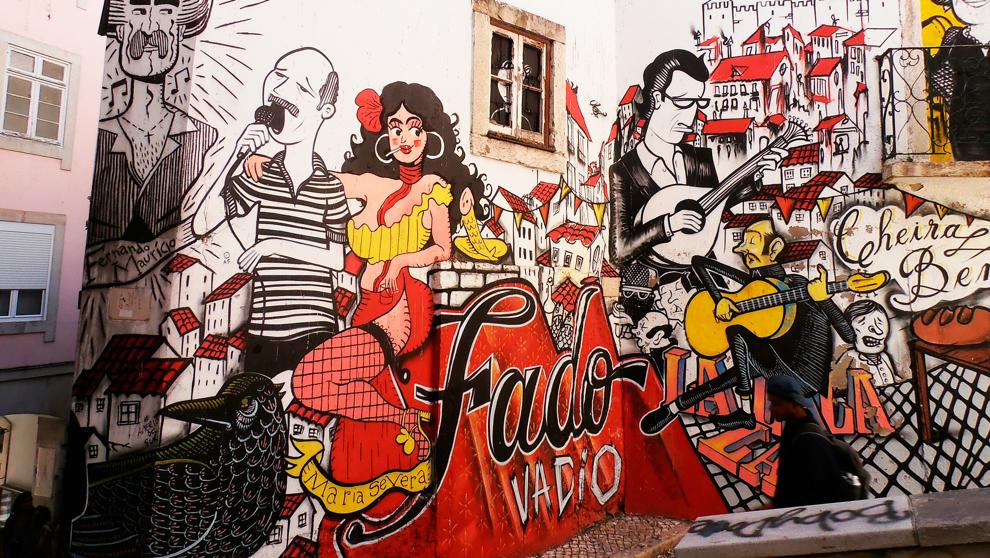
Article updated March 2026 – Fado Museum admission prices, best Fado houses and cultural agenda updated.
In brief: Fado, listed as UNESCO Intangible Cultural Heritage since 2011, is the musical soul of Lisbon. More than 50 Fado houses welcome hundreds of thousands of enthusiasts each year, mainly in Alfama, Mouraria and Bairro Alto. The Fado Museum (€5 adult) is the ideal starting point for understanding this unique genre before experiencing it live in the evening.
Fado in Lisbon: 5-star discovery
Before immersing yourself in the history of Fado and if you have decided to visit Lisbon, you will find below a selection of guided and unguided activities that will allow you to discover Fado in the Portuguese capital. These visits have all been very well received, so you won’t be mistaken in your choice and are organised by English speaking guides. They will therefore be able to teach you much more about Fado than you will ever be able to read about it!
Fado Museum in Lisbon
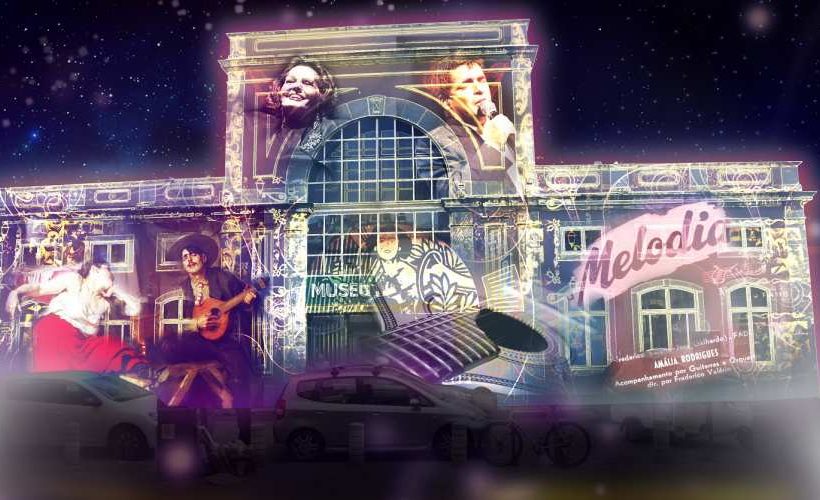
The Fado Museum (Museu do Fado, Largo do Chafariz de Dentro, Alfama) has become since its opening in 1998 a cultural and musical centre that attracts researchers, the curious, tourists and lovers of this authentic Portuguese art. The permanent exhibition tells the story of Fado from the 19th century until today. In the museum you will be able to see the evolution of the Portuguese guitar, listen to rare recordings and discover a collection of instruments, scores and performers’ costumes from different eras. The museum also organises monthly concerts, workshops and themed visits — making it the best starting point before a Fado evening.
The museum is open Tuesday to Sunday from 10:00 to 18:00 (last admission: 17:30). It is closed on Mondays, 1 January, 1 May and 25 December.
- Adult ticket: €5
- Discounts: From 13 to 25 years old €2.50 / Over 65 years old €4.30 / Disabled persons + accompanying person €4.30 / Lisbon card holder €4.00 / Children up to 12 years old: free of charge
Where to listen to Fado in Lisbon in 2026?
Lisbon has more than 50 Fado houses. Here is a selection of the most authentic and appreciated addresses, for all budgets:
| Fado House | Area | Price/person | Notes |
|---|---|---|---|
| Tasca do Chico | Bairro Alto | ~€20 | Convivial, petiscos, no set menu. Intimate and authentic atmosphere. |
| Povo Lisboa | Pink Street | ~€20 + €4 artist | Modern Fado, every evening 8pm–11pm. Good entry-level address. |
| Fado ao Carmo | Chiado/Alfama | €30–60 (menu) | Intimate, English-friendly, quality cuisine. Every evening from 8pm. |
| Devagar Devagarinho | Av. Liberdade | ~€25 | Small venue, local clientele. Wed/Fri 7:30pm–1am. |
| Fado em Si | Alfama | €47 (menu) | 18th-century palace, candlelit. 7:30pm–1am. |
| Sr. Fado | Alfama | €47 (menu) | Family-run. Wed/Thu/Sat/Sun from 7:30pm. |
| Clube de Fado | Alfama | ~€60 | Institution since 1995. 7pm–1am. |
| Mesa de Frades | Alfama | ~€60 | Fado Vadio in a chapel. Mon–Sat 8:30pm–1am. |
| Casa de Linhares | Alfama | €60–70 | Ancient vaulted ceilings, top artists. 8pm–2am. |
| Canto do Poeta | Alfama | €47 (menu) | Traditional, good Porto wine. Every evening. |
Practical tips: Book 1 to 2 months in advance during high season (April–October). Silence is strictly expected during performances. The minimum spend is generally €20 to €30 per person. Children are welcome in most venues if silence is maintained.
Origins of Fado
This musical genre has undergone a transformation from the street music originally played by marginalized people in cheap taverns in the country, where women made their living by singing. What is most interesting is how these metamorphoses took place even before this musical genre became widely known. Portuguese Fado was above all influenced by cultural changes and historical events.
Until the 19th century the word fado was not used in relation to the musical genre but came from the Latin fatum, meaning destiny. The first mention in the Portuguese dictionary of Fado as a musical genre appears in the second half of the 19th century according to these terms:
A narrative poem that tells a real story or a fiction with a sad ending, which describes the sad life of people of a certain class, such as sailors or nuns (hence the notion of destiny). This folk music with a special rhythm is usually performed on the guitar.
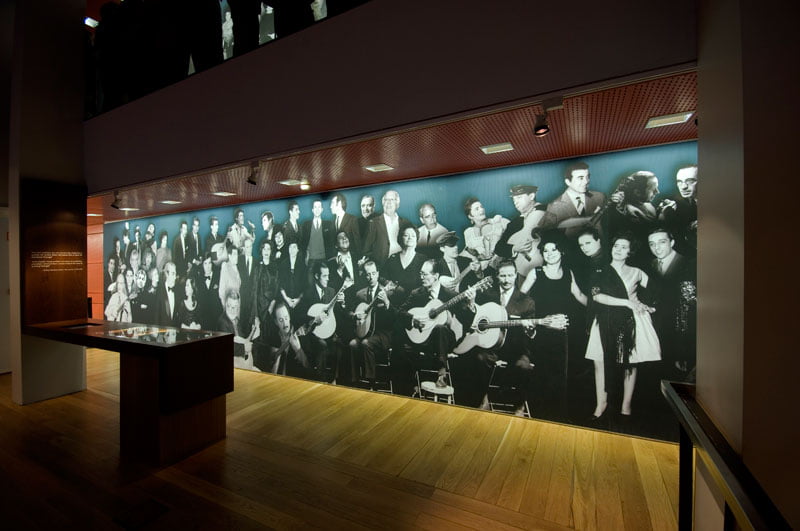
The history of Portuguese Fado is still the subject of debate and interesting and sometimes contradictory theories about its possible origins. One of the first theories suggests the Arab origin. Since the 8th century, the Iberian Peninsula has been under Arab influence. The Portuguese historian Theophilus Braga suggests that Fado developed from Arabic folk tunes. This theory is based on the similarity between the melancholic stories of the Moors and the songs of Fado. This theory is strongly contradicted in Portugal due to historical and date inconsistencies.
Another group of historians has suggested that this music comes from the songs of the troubadours of the Middle Ages: the themes of the poems in the songs of the Portuguese troubadours and those at the heart of 19th century Fado are very similar (love, friendship…). Some troubadour songs about love were sung for ladies, which is very close to the Fado in Coimbra, where it is mainly sung by men.
Other songs about friendship were sung mainly by women to talk about a lost friend, the main theme that gave birth to Fado in Lisbon.
The following theory is the most romantic and dates back to the time when Portugal began to discover the world, at the time of the sailors. This era began in the fifteenth century with the conquest of Ceuta, from which sea travel became an integral part of Portuguese life. The sailor was the main character in the songs: a man who left his home, his family and plunged into a dangerous and unexplored world, risking his own life. Singing and playing a musical instrument helped him to accept his destiny and the uncertainty of the future.
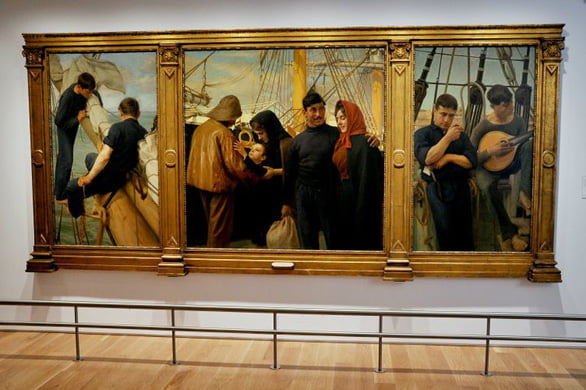
These nostalgic songs about love and homesickness are considered to be the origins of Fado. José Régio’s poem “Fado Português” (1941) supports this theory, sometimes considered too romantic a cliché.
And the last theory, defended by José Alberto Sardinha, is that Fado has real Portuguese roots.
After studying traditional songs dating from the Middle Ages in different regions of Portugal, he discovered a single poetic-musical tradition that is at the basis of the development of Fado: a tragic and sentimental story, distributed at fairs and then transmitted from city to city, from village to village and played by street musicians. These stories speak of the intertwining of destinies, the origin of the word “Fado”.
Despite all the research, the origins of Fado remain a mystery. Perhaps everything we have described above has influenced the emergence of the Portuguese Fado genre.
Fado: from the hostel to the big stage
The emergence of Fado as a musical style began with the urbanization of Lisbon and Portugal in the 19th century. Revolutions, political battles and reforms drew peasants to the capital.
All these people greatly increased the population of the city and created a new class of proletarians in the poor neighborhoods of Lisbon, such as Alfama, Mouraria, Madragoa, Graça. They were united by poverty and the struggle for survival. In this poor world, smuggling, clandestine gambling and theft were their main economic engine.
There were taverns and brothels, places exclusively reserved for men where women were only there for pleasure. In this atmosphere, folk songs and dances were sung and danced. At that time, these institutions were called “Casas de Fado”.
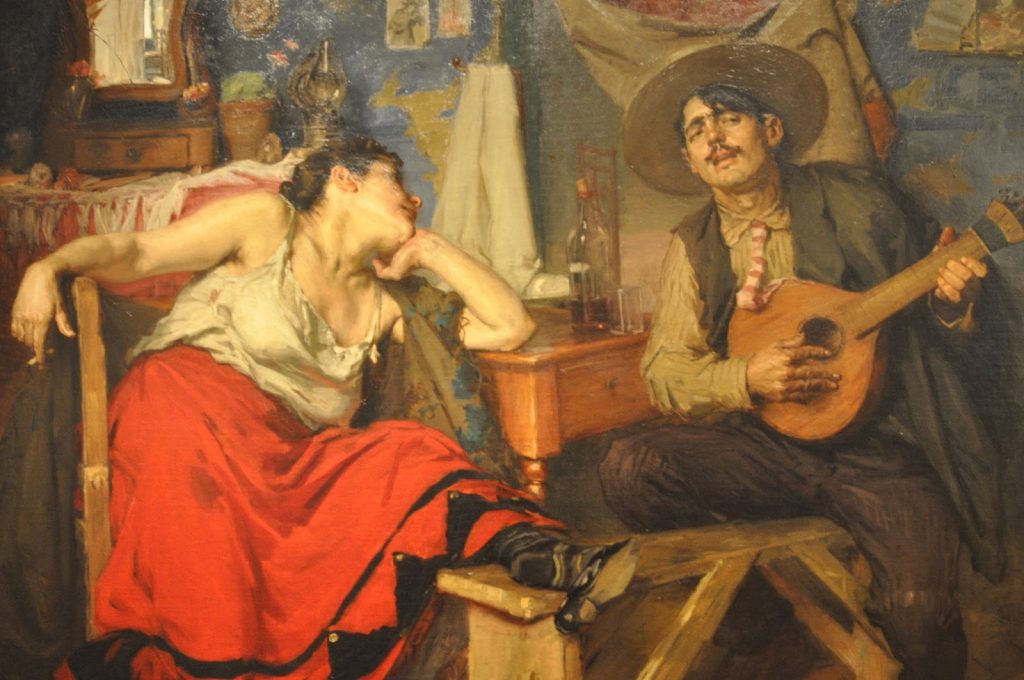
The first singer known to have sung, played and danced Fado is Maria Severa Onofriana. She was a prostitute from Mouraria, perhaps born on 26 July 1820 and died on 30 November 1846 (dates are not certain). Thanks to her beauty and her gift for Fado, she soon became Count Vimiosa’s mistress. He often invited her to aristocratic salons, giving her the opportunity to perform in front of a noble audience. This is how Fado went beyond the borders of marginal poor neighbourhoods and became popular at social gatherings.
It wasn’t until the 1960s that the first notable male Fado performer appeared, Césarée, a factory worker in Alcântara. The main themes of the songs were love, work, social suffering, songs about people’s lives, crimes, maritime disasters and earthquakes, the death of famous people, current political and religious conflicts, streets and neighbourhoods of Lisbon and bullfights.
In other words, the early Fados told the story of the daily routine and all its aspects. Fado went beyond brothels and replaced taverns with palaces, theatres and estates. The first professional Fado singers appeared and received remuneration. This music was played in festivals in Lisbon and elsewhere in Portugal.
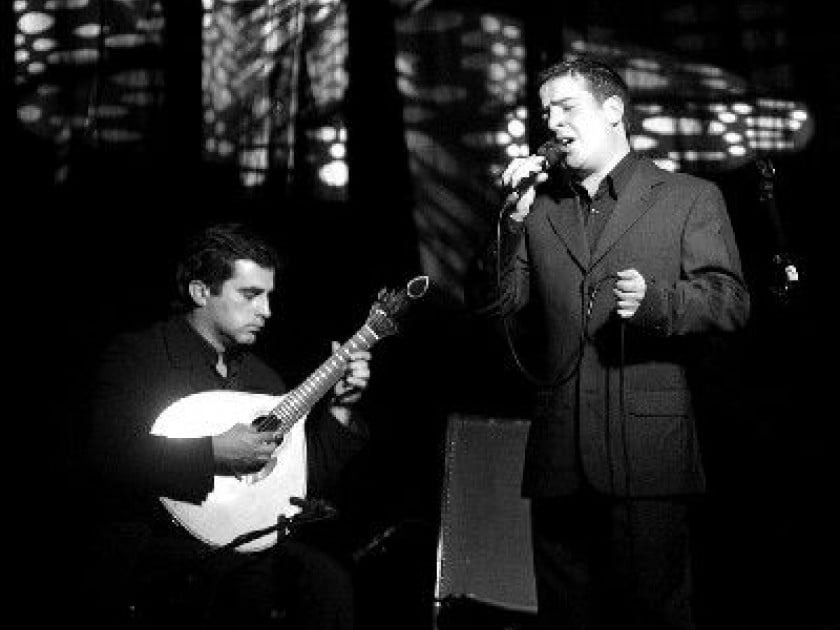
Towards the end of the 19th century, the Portuguese guitar made its appearance in living rooms. Young aristocrats started taking guitar lessons. In the twentieth century, Fado became a central figure in Portuguese culture, records were released, lyrics were recognized by writers, Fado was widely integrated into the world of radio, theater, then television and cinema. In 2011, it was inscribed on the UNESCO Intangible Cultural Heritage list. Today, artists such as Mariza and Ana Moura continue to carry and renew the tradition.
In 1927, the Casas de Fado were officially created and replaced all the cafés and pubs where Fado was played from time to time. Since the first Fado houses, “Adega Mesquita”, “Adega Machado” and “Café Luso” have survived.
Fado in Lisbon: frequently asked questions
How much does a Fado evening in Lisbon cost?
Budget between €20 (Tasca do Chico, Povo Lisboa) and €60–70 for upscale venues with menu included. The minimum spend is generally €20 to €30 per person.
Can you hear Fado for free in Lisbon?
Spontaneous Fado performances in Alfama’s alleyways are rare. Entry to the Fado Museum is free for under-12s and Lisboa Card holders. The museum also organises monthly concerts at reduced prices.
Do you need to book a Fado house in advance?
Yes — for the best addresses in Alfama and Bairro Alto, booking 1 to 2 months ahead is recommended in high season (April–October) and on weekends.
Portuguese Fado videos
You will find below videos of Mariza and other Fado singers in Portugal. Enough to give you a foretaste of this musical style which is perhaps still unknown to you. If you wish to discover it here, I advise you to book a guided tour of Lisbon around Fado among those proposed at the top of the page, I have carefully selected them.