Lisbon’s public transport system has a reputation for being modern, clean and punctual. The most comfortable means of transport from a tourist point of view is certainly the metro. You can also use trams, buses, trains or lifts such as the Elevador da Glória or the Elevador de Santa Justa.
Article updated March 2026 – fares and information verified.
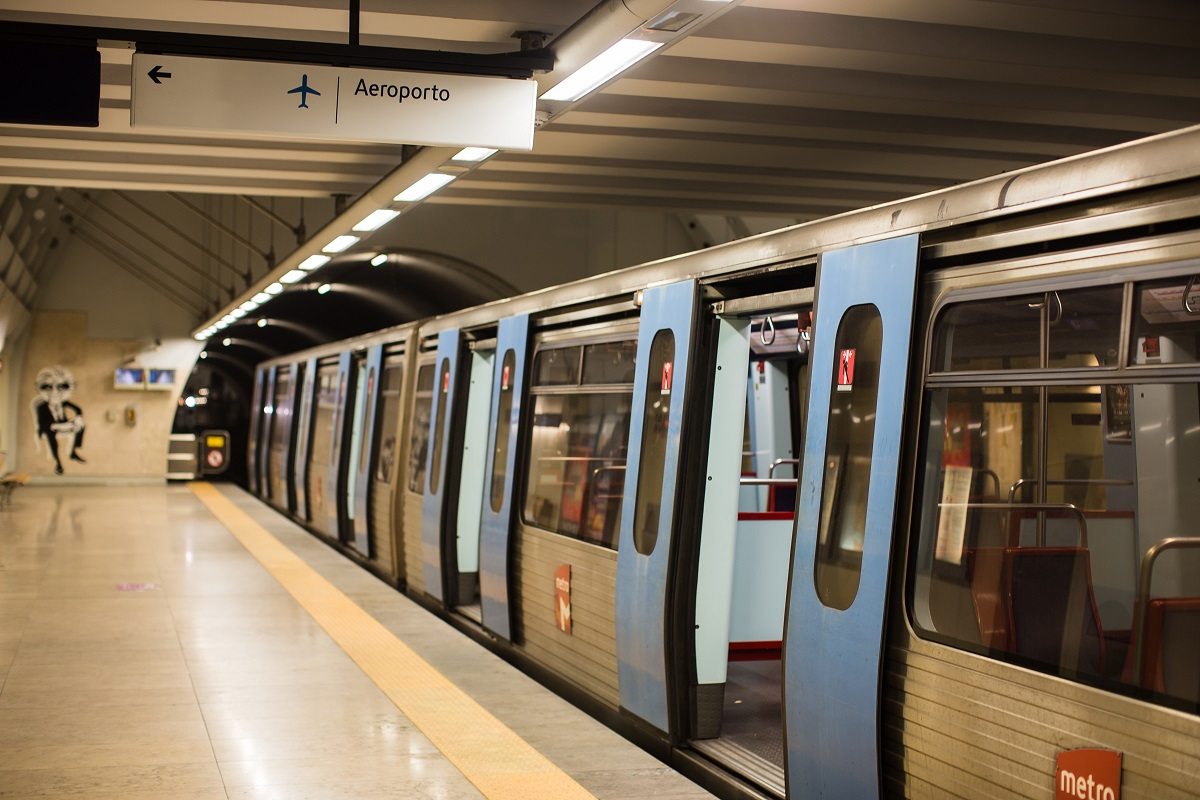
In short: a single ticket costs between €1.80 and €2.20 (valid for 60 minutes with connections), the 24h pass costs €7.25, and the rechargeable Navegante card remains the most flexible option for getting around the city. The airport is directly connected to the centre by metro (red line, Aeroporto station).
Free public transport in Lisbon
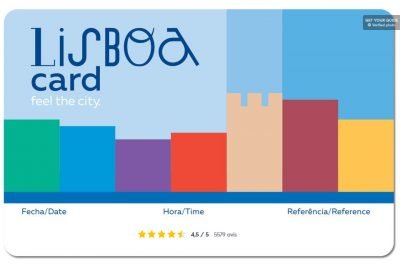
If you are visiting the Portuguese capital for several days, you will likely be using public transport a lot — and enjoying many guided tours of Lisbon along the way. In that case, I think the smartest move is to buy the Lisboa Card. This card is valid for 24h, 48h or 72h depending on the model you choose, and allows you to use all public transport in Lisbon for free.
The card is not free, of course, but it also gives you access to a large number of discounts or free entries to various monuments in Lisbon such as the Monastery of Jerónimos, the Tower of Belém, Tramway 28 and many others.
To find out more, you can consult the Lisboa Card guide on this site or book it directly below.

Click on the Lisboa Card to order it online
Lisbon transport card: Navegante, Viva and 7 hills
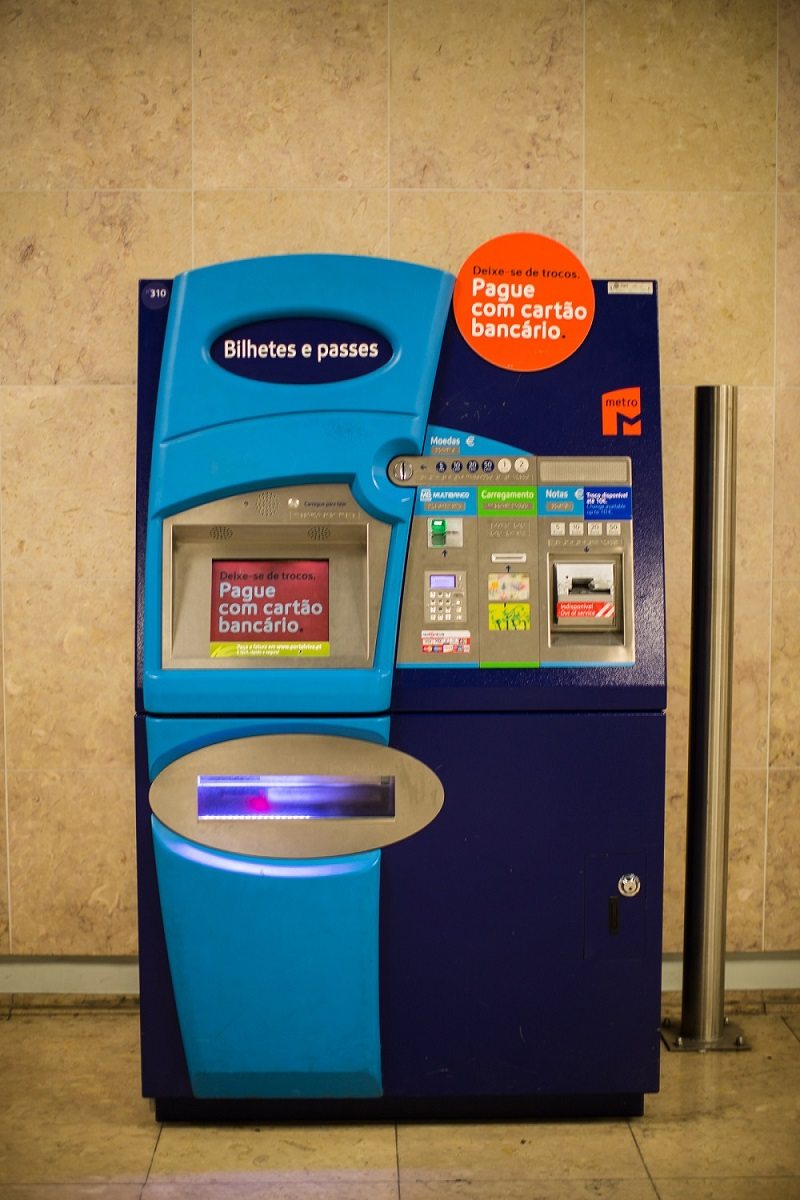
To use public transport in Lisbon, you need a rechargeable card. The Navegante card is now the reference card for the Lisbon network, gradually replacing the older Viva Viagem and 7 Colinas cards, which are still valid but becoming less common. The card costs €0.50 and can be bought at vending machines in metro stations. I recommend paying in cash — foreign bank cards do not always work in every machine, so don’t take the risk.
Before you can use your card, you need to top it up. The card can work in three different modes: single ticket, day ticket or zapping.
- Single ticket: allows you to use Lisbon’s public transport for 60 minutes from the moment of purchase, with the possibility of changing transport. Be careful though — you cannot pass through the same stop twice, so a metro transfer is only possible if the stations are connected to each other.
- Day ticket: allows you to use all means of transport in Lisbon for 24 hours from the moment of purchase, including lifts. This is the most cost-effective option if you are visiting Lisbon intensively in a single day. If you want a ticket for several days, simply buy as many day tickets as you need.
- Zapping: this method involves topping up your transport card with between €3 and €40. It is debited after each use of public transport in Lisbon. This card also allows you to take the train to Sintra and Cascais.

You can only have one mode or type of ticket active at a time on your Lisbon transport card. You pay when you top up the card and can only switch mode after resetting the status on the card or using up its balance.
In theory, you can change mode at the information points, but you will lose money doing so. For a tourist visit to Lisbon, I think the best option is to go for the unlimited day pass for one or more days.
Lisbon public transport prices in 2026
Fares saw a slight increase of 2.28% on single tickets in 2026, while monthly Navegante subscriptions remain unchanged. Here is what you need to know:
| Ticket type | 2026 price | Valid for | Best for |
|---|---|---|---|
| Single ticket (metro, bus, tram, lift) | €1.80 – €2.20 | 60 min with Carris connections | Tourists, occasional use |
| 24h pass Carris/Metro | €7.25 | Bus, tram, lifts, metro | Intensive one-day visit |
| 24h pass with ferry (Transtejo) | ~€10.35 | Bus, tram, metro + ferries | If crossing the Tagus |
| Zapping (Navegante prepaid) | ~€1.66 / journey | Metro, bus, tram, train, ferry | Regular and varied use |
| Navegante municipal | €30/month | 1 municipality | Residents |
| Navegante metropolitano | €40/month | Entire metropolitan area | Lisbon/suburbs commuters |
| Navegante Família | €80/month | Same household | Resident families |
| Navegante +65 | €20/month | Entire metropolitan area | Seniors |
| Navegante 12 | Free | All transport | Children up to 12 years old |
Where to buy public transport tickets in Lisbon
Tickets for all public transport in Lisbon can be purchased at the most frequented transport locations: at the yellow booths marked with the Carris company stamp, at some post offices, at all metro stations and train stations, and at kiosks and service points (blue sign on white background).
It is also possible to buy a transport ticket directly from the driver on some means of transport, but the ticket will generally be more expensive. Tickets for specific rail connections are bought at train stations, and the same applies to ferry crossings.
- From the driver: you can buy tickets for buses, trams and funiculars, but they are more expensive.
- At each Lisbon metro station: you can buy individual tickets for the metro, bus, tram or lift, as well as 24h tickets with or without the Zapping option. Tickets can be purchased at special blue or yellow vending machines and at the ticket office.
- At points marked “MOB”: you can buy individual journeys by metro, bus, lift and tram, as well as Zapping and 24h tickets. Such points can be found for example under the Santa Justa lift, near Santa Apolonia station or at the kiosks in Cais do Sodré.
- At train stations: you can buy single train journeys or season tickets at special green vending machines and at the ticket office.
- At ferry terminals: you will find Zapping tickets or single tickets for ferry crossings, available at the ticket office or at special vending machines.
- On tram 15, at special on-board machines.
Means of transport in Lisbon
Carris is the company responsible for bus, lift and tram services in Lisbon. For these means of transport, you can buy a more expensive ticket on board or use a prepaid card. You board the bus through the first door at the front. For the Santa Justa lift, you can buy a return ticket directly at the ticket office. The official Carris website provides plenty of up-to-date information to help you plan your journeys.
If you plan to visit Sintra and Cascais, you can buy a combined train and bus ticket that allows you to travel around Lisbon for 24 hours and includes connections to Sintra, Cascais, Azambuja and Sado. Before buying your card, it is worth doing the maths to find the most cost-effective option.
You can check timetables on the official CP website, which manages train transport around Lisbon.
Metro in Lisbon
The metro is one of the most popular and convenient means of transport in Lisbon. The different lines are colour-coded in yellow, green, blue and red. It runs every day from 6:30 am to 1:00 am.
Many metro stations in Lisbon are beautiful enough to be worth a look in their own right, with decorations, historical references and azulejos:
- Green line – Linha Verde
- Blue line – Linha Azul
- Yellow line – Linha Amarela
- Red line – Linha Vermelha

Metro from Lisbon airport
Lisbon airport is directly connected to the city centre by metro via the red line (Aeroporto station). The journey to the centre takes between 20 and 30 minutes with one transfer depending on your destination. It is the cheapest and most practical option for reaching your accommodation. For late arrivals or if you have a lot of luggage, taxis, Uber and Bolt are all readily available and more affordable than in most other European capitals.
Lifts in Lisbon
A popular means of public transport among tourists, the lifts are something many visitors don’t know about before arriving in Lisbon. They are genuinely used every day by locals as a means of transport — just like tram 28.
Below you will find the prices and opening hours of the different lifts in Lisbon:
- Elevador de Santa Justa: the only vertical lift in Lisbon, it operates every day in summer (March–October) from 7:00 am to 11:00 pm and in winter (November–February) from 7:00 am to 9:00 pm. The return ticket costs €5.15. The Miradouro at the top is open from 9:00 am to 11:00 pm (9:00 pm in winter).
- Elevador da Glória: cable car in service since 1885, open Monday to Thursday from 7:15 am to 11:55 pm, Friday from 7:15 am to 12:25 am, Saturday from 8:45 am to 12:25 am, and Sunday and public holidays from 9:15 am to 11:55 pm. Ticket price: €3.70.
- Elevador da Bica: in service since 1892, it runs Monday to Saturday from 7:00 am to 9:00 pm and on Sundays and public holidays from 9:00 am to 9:00 pm. Ticket price: €3.70.
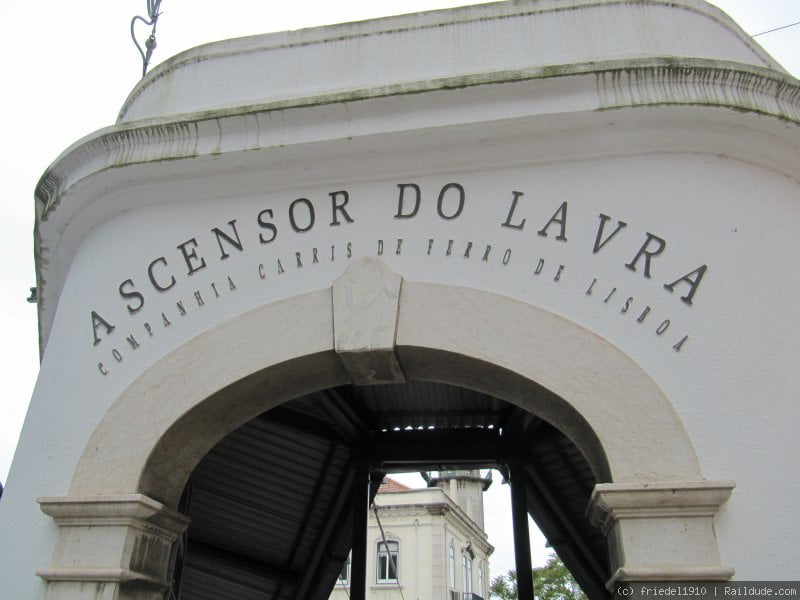
- Elevador da Lavra: in service since 1884, it operates Monday to Saturday from 7:50 am to 7:55 pm and on Sundays and public holidays from 9:00 am to 7:55 pm. Ticket price: €3.70.
Lisbon’s historic tramways
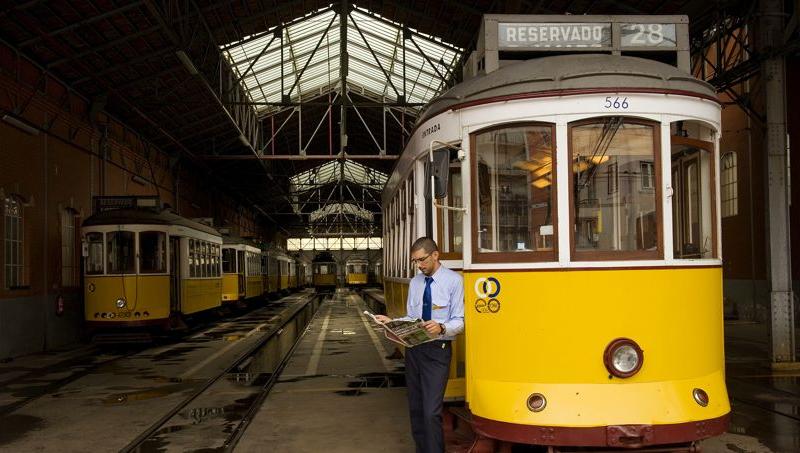
Lisbon’s Tramway 28 is probably the most iconic image in photos and postcards of the Portuguese capital. Lisbon trams first appeared in 1873, when they were pulled along the rails by horses.
In 1901 the trams were connected to the electricity grid, and just over 50 years later the city was operating nearly 30 tram lines. The development of the metro gradually reduced the importance of Lisbon’s tram network until most lines were closed.
There are now 5 tram lines in Lisbon, most of which are operated by small historic trams called Remodelado. They serve more as a tourist attraction these days, though that doesn’t mean locals have stopped using them — some never have.
The most famous historic tram line is line 28, which takes you through many historic neighbourhoods such as Alfama, Estrela, São Bento and Graça. The tram passes in front of the cathedral and crosses Portas do Sol square, from where you can walk up to the Castle of Saint George. The Remodelado trams are original vehicles — only certain mechanisms such as the brakes have been updated.
When you board a Lisbon tram, remember to hold on tight. The seats are not particularly comfortable, but that takes nothing away from the charm of the ride. In summer, finding a seat is almost impossible.
Tram line 28 runs from 5:00 am to 11:00 pm. During the middle of the day, trams pass several times an hour.
Other tram lines in Lisbon
- Tram 12: a four-kilometre line running around Alfama and Baixa. It shares part of its route with tram 28 and the full journey takes about 20 minutes. This line is often less crowded, so you have a better chance of getting a seat before reaching Alfama.
- Tram 15: served by modern low-floor trams, this line runs along the waterfront from Lisbon city centre to the Belém district.
- Tram 18: runs from Cais do Sodré station to the Ajuda district, where the National Palace of Ajuda and the Botanical Garden (Jardim Botânico da Ajuda) are located.
- Tram 25: runs between Campo Ourique (Prazeres) and Martim Moniz.
Tickets can be bought on the tram from the driver (more expensive) or using the balance on your prepaid card. For trams heading to Belém, tickets can also be bought at the vending machine. On a busy tram, watch out for pickpockets.
Useful apps for getting around Lisbon
For real-time timetables, connections and night bus routes, a few apps come in very handy: Carris for buses and trams, Metropolitano de Lisboa for the metro, and Moovit which covers the entire network. They will save you a lot of unnecessary waiting, especially outside peak hours.
Lisbon transport: tips and useful information
- For buses and trams, board through the first door at the front, next to the driver. The exception is tram 15, where this rule does not apply.
- Your ticket is validated when the green light comes on. If the red light comes on, the ticket has not been validated — place the card on the red dot and wait a moment before trying again.
- Buses and trams will not stop unless the driver knows you want to get off. Press the “Parar” button to signal your stop.
- At some train stations (such as Santa Apolónia or Estoril), you must validate your ticket before going onto the platform.
- Public transport in Lisbon is efficient and well-connected. It is far preferable to using a car in the city.
- The metro runs from 6:30 am to 1:00 am.
- Fines are steep and can reach 100 to 150 times the ticket price. Always travel with a valid ticket.
- Carris trams and buses only allow hand luggage.
- Watch out for pickpockets in Lisbon, particularly on tram 28 and in busy tourist areas.
- Cais do Sodré is Lisbon’s main transport hub: buses, metro, trains, trams and ferries all converge here.
- Taxis in Lisbon are more affordable than in most other European capitals and can be a good alternative in some situations — as are Uber and Bolt, which are both widely available across the city.
FAQ – Public transport in Lisbon
What is the best transport card for visiting Lisbon?
For a tourist visit, the 24h pass at €7.25 is the most practical option if you plan to move around a lot during the day. If you are staying for several days, buy as many day passes as you need, or consider the Lisboa Card, which includes free transport as well as free or discounted entry to many monuments.
How much does a metro ticket cost in Lisbon in 2026?
A single metro ticket costs between €1.80 and €2.20 in 2026, valid for 60 minutes with connections across the Carris network (bus, tram, lifts). In zapping mode on the Navegante card, a journey costs around €1.66.
How do I get from Lisbon airport to the city centre?
The easiest and cheapest option is the metro: the red line serves Aeroporto station directly. The journey to the centre takes 20 to 30 minutes with one transfer depending on your destination. Bus 736 is also an option. For late arrivals or if you have a lot of luggage, Uber, Bolt and taxis are available around the clock.
Can I pay by card at the ticket machines in Lisbon?
In theory yes, but in practice foreign bank cards do not always work in every machine. I recommend having a few euros in cash on you, especially when you first arrive, just to be safe.
Is tram 28 included in the transport pass?
Yes, tram 28 is part of the Carris network and is therefore included in the 24h pass and accessible with the Navegante card in zapping mode. If you have the Lisboa Card, it is included for free.
What is the difference between the Viva Viagem card and the Navegante card?
The Viva Viagem and 7 Colinas are the older Lisbon transport cards, still valid but gradually being phased out in favour of the Navegante card. The Navegante is now the standard card for the network, compatible with all modes of transport and monthly subscriptions.